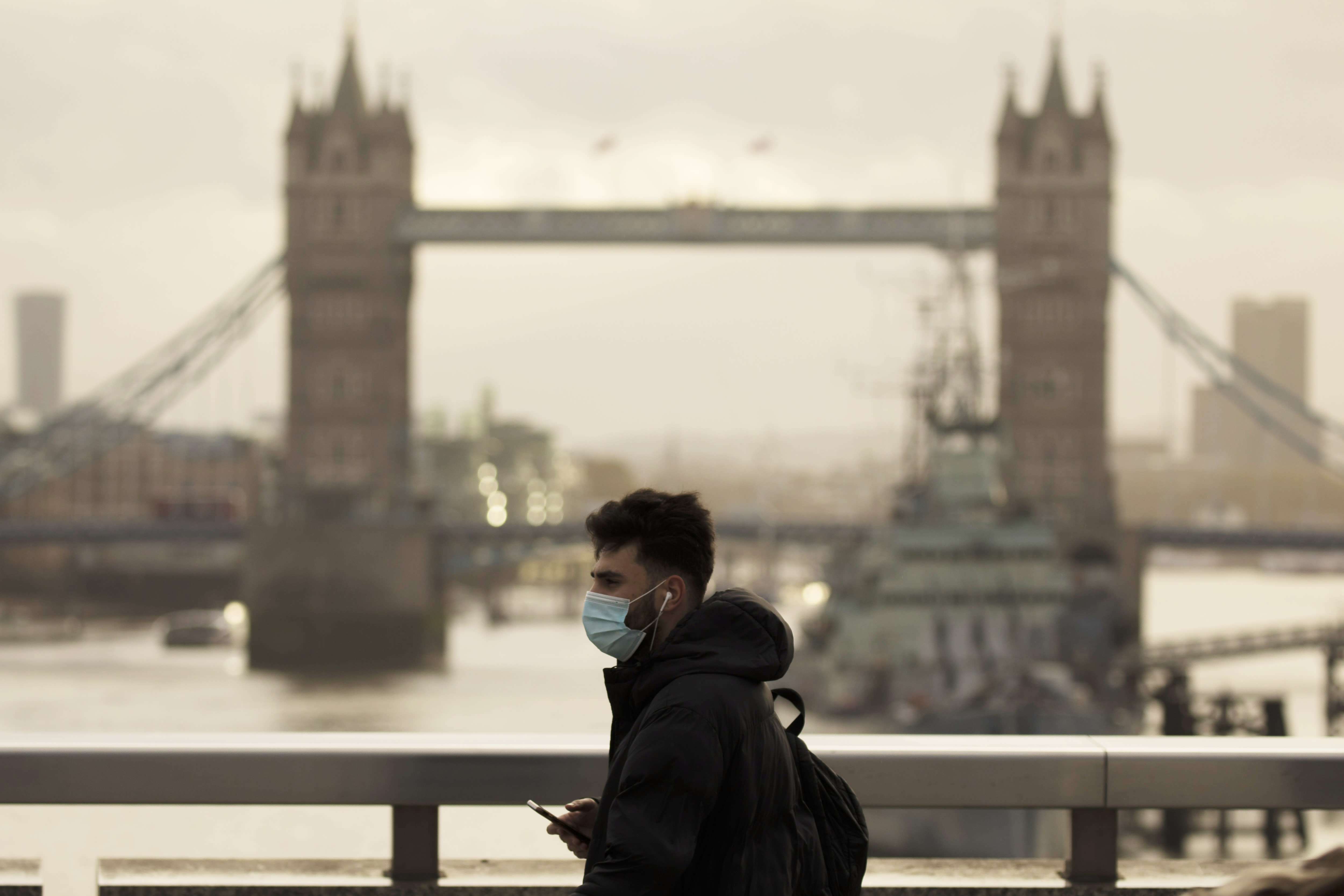
Commuters cross London Bridge in view of Tower Bridge in London, U.K., on Monday, Nov. 2, 2020.
Jason Alden|Bloomberg|Getty Images
LONDON– The U.K. announced Wednesday its largest peacetime borrowing level ever as the coronavirus pandemic is forecast to cause the biggest plunge in financial output for 300 years.
The British economy is anticipated to agreement by 11.3%in 2020, according to the Office for Budget Duty (OBR), prior to growing by 5.5%in 2021, 6.6%in 2022 and 2.3%, 1.7%and 1.8%in each of the following years.
GDP (gross domestic product) is not expected to go back to pre-crisis levels up until the 4th quarter of 2022, and the economy will be around 3%smaller sized in 2025 than expected in the federal government’s March budget plan.
The OBR likewise forecast that loaning is set to reach an overall of ₤394 billion this year ($526 billion), 19%of GDP, its greatest level in peacetime history, prior to being up to ₤164 billion in 2021, ₤105 billion in 2022/ 3 and staying at around ₤100 billion, 4%of GDP, for the rest of the projection period.
Underlying financial obligation after eliminating the short-term impact of the Bank of England’s property purchase program is anticipated to be 91%of GDP this year, rising progressively to 97.5%in 2025/ 6.
In his spending evaluation Wednesday, British Financing Minister Rishi Sunak revealed ₤280 billion in public spending to direct the nation through the consequences of the pandemic.
Next year, this will consist of ₤18 billion for testing, PPE and vaccines, ₤ 3 billion to support the healing of the National Health Service (NHS), ₤ 2 billion on transport, ₤ 3 billion to regional councils and ₤250 million to deal with homelessness. A further ₤ 2.6 billion will be given to devolved administrations in Scotland, Wales and Northern Ireland as part of the ₤55 billion expenditure in 2021.
” High as these expenses are, the costs of inaction would have been far greater, but this circumstance is clearly unsustainable over the medium term,” Sunak informed your house of Commons on Wednesday.
” We might just act in the way we have due to the fact that we came into this crisis with strong public financial resources, and we have the obligation, as soon as the economy recovers, to return to a sustainable fiscal position.”
Ahead of the release, Prime Minister Boris Johnson’s spokesman had told press reporters that the OBR forecasts would be “sobering” but that “expenses would have been much higher” had the federal government not taken its selected course of action to combat the pandemic.
As of Wednesday morning, the U.K. has actually taped more than 1.5 million cases of Covid-19 and 55,935 deaths, according to information compiled by Johns Hopkins University. England is currently in lockdown up until December 2 in a bid to halt a 2nd wave of infections, after which an across the country tiering system will be reestablished.
Preliminary figures from the Workplace for National Statistics (ONS) previously this month showed the U.K. economy grew by 15.5%in the third quarter, its sharpest quarterly expansion because records began, following a record 19.8%plunge in the previous quarter.
However, activity is anticipated to take another hit in the run up to year-end. GDP (gdp) remains 9.7%listed below the level seen at the end of 2019, according to the ONS.
Unemployment to peak next year
In an effort to prevent an abrupt spike in unemployment, the government has already announced the extension of its furlough scheme till completion of March.
Sunak promoted the government’s financial reaction in his statement, highlighting that the scheme had “safeguarded jobs, supported earnings and assisted organizations survive.”
Nevertheless, the OBR has forecasted that unemployment will rise to a peak of 7.5%, or 2.6 million individuals, in the second quarter of 2021, before falling steadily to 4.4%by the end of 2024.
Sunak revealed a more ₤ 3 billion on Wednesday for the Department for Work and Pensions (DWP) to provide a “three-year reboot program” focused on assisting more than 1 million people who have actually been out of work for over a year back into work.
Capital expenditure will amount to ₤100 billion in 2021, a ₤27 billion increase on last year, and Sunak also revealed the development of a new National Infrastructure Bank and higher financial investment in research study and advancement (R&D).
In her action to the spending evaluation, Labour’s Shadow Financing Minister Anneliese Dodds criticized Sunak for stopping working to mention Brexit and the upcoming deadline for the U.K. to concur a free trade arrangement with the European Union.
‘ Laying the foundations’
In a statement Wednesday, the CBI (Confederation of British Industry) commended the spending evaluation as laying “the foundations for a brighter financial future.”
” A new National Facilities Bank, long-term funding for innovation, and a thorough plan for developing jobs and renewing abilities are simply a few of the building blocks needed to deliver on this vision,” said CBI chief financial expert Rain Newton-Smith.
” However ambition should be matched by action on the ground. The Federal government’s dedication to develop, construct, develop should be delivered now. This means a clear strategy to upgrade the UK’s facilities and publishing the Energy White Paper.”
Newton-Smith included that there could be “no slow down” in assistance for businesses affected by Covid-19, recommending that business investment and self-confidence will be key to the healing.
PwC chief financial expert Jonathan Gillham stated regardless of the “eye watering” borrowing figures, the ostensible imminence of a Covid-19 vaccine indicates the U.K. economy need to be able to grow its escape of the deficit spending.
Gillham recommended that ought to Sunak’s plans for the National Infrastructure Bank and increased R&D spending in 2021 and 2022 have actually the wanted impact, the U.K. could see a more rapid healing than currently forecast by the OBR.
” The Chancellor’s choice to maintain greater public costs levels with a genuine term rise of 3.8%is welcome, but core spending is ₤10 billion less than what was revealed in Spending plan 2020,” Gillham stated.
” Nonetheless, a refocusing of costs on growth priorities integrated with ongoing emergency situation COVID spending, an increase in the national living wage and extra support for the long term jobless, need to help those who have actually been hardest struck by the financial consequences of the COVID pandemic.”
Comments
Post a Comment