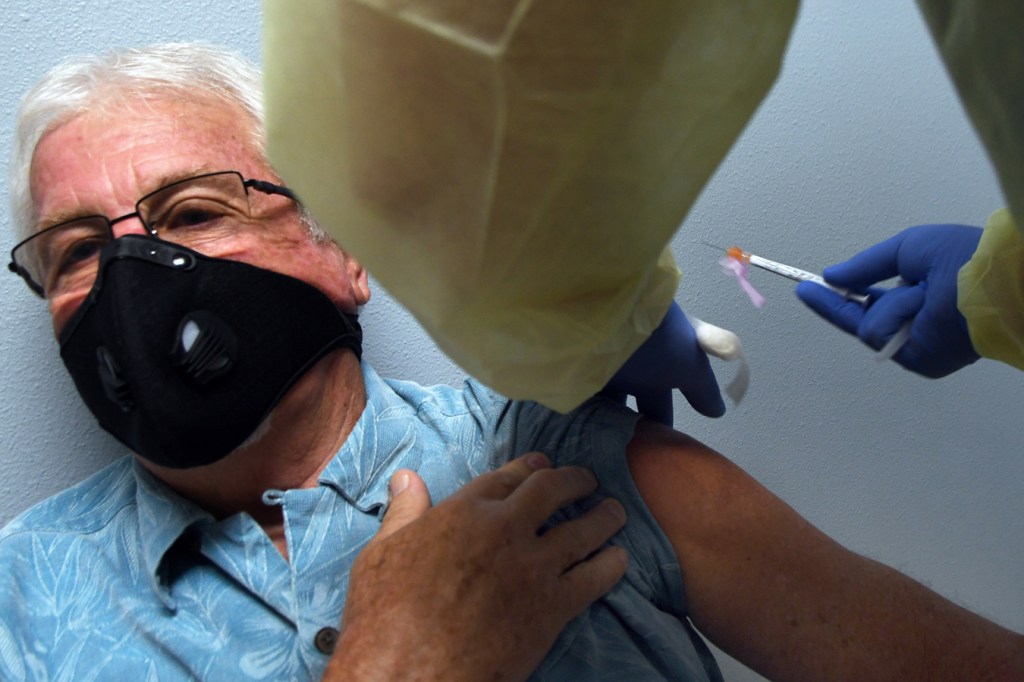
Vaccines that safeguard versus COVID-19 are on the way. What should older grownups anticipate?
The very first prospects, from Pfizer and Moderna, might show up before Christmas, according to Alex Azar, who heads the Department of Health and Human Solutions.
Both vaccines are notably efficient in preventing illness due to the coronavirus, according to information launched by the business, although much of the information from clinical trials is still to come. Both have actually been checked in adults age 65 and older, who installed a strong immune response.
Senior citizens in retirement home and helped living centers will be amongst the first Americans vaccinated, following suggestions recently by a federal advisory panel. Older adults living in your home will need to wait a while longer.
Numerous unpredictabilities stay. Will the vaccines use meaningful protection to elders who are frail or have multiple chronic diseases?
Here’s a take a look at what’s understood, what’s not and what lies ahead.
Pfizer’s vaccine will be evaluated by a 15- member Food and Drug Administration advisory panel on Thursday. Moderna’s vaccine is anticipated to go prior to the panel Dec.17
At least two days prior to each meeting, an analysis by FDA personnel will be revealed. This will be the first opportunity to see extensive information about the vaccines’ efficiency in big stage 3 medical trials, including more information about their impact on older adults.
So far, summary results disclosed in news releases indicate that Pfizer’s vaccine, produced in collaboration with BioNTech, has an total effectiveness rate of 95% and effectiveness of 94%in individuals 65 and older. Moderna’s overall efficacy is 94%, with 87?ficacy in preventing moderate disease in older grownups, according to Moncef Slaoui, primary science advisor to Operation Warp Speed, the federal government’s COVID-19 vaccine advancement program.
If the advisory panel gives a green light, the FDA will choose within days or weeks whether to license the Pfizer and Moderna vaccines for emergency situation usage. Circulation of the vaccine has actually already started, and healthcare suppliers are expected to start administering it right away after the FDA acts.
Allotment framework. At a Dec. 1 meeting of the Advisory Commission on Immunization Practices (ACIP), which guides the Centers for Disease Control and Avoidance on vaccines, specialists recommended that individuals residing in long-term care (mainly nursing houses and assisted living facilities) and healthcare employees be the very first groups to get COVID-19 vaccines.
This recognizes the remarkable problem of COVID-19 in long-lasting care facilities. Although their homeowners represent less than 1%of the U.S. population, they account for 40%of COVID deaths– more than 100,000 deaths to date.
The commission’s decision comes regardless of an absence of proof that Pfizer’s and Moderna’s vaccines are effective and safe for frail, vulnerable seniors in long-lasting care. Vaccines were not tested in this population. Federal officials insist negative effects will be carefully kept an eye on.
Next in line likely would be important employees who can not work from home, such as authorities, firefighters, instructors and individuals utilized in food processing and transportation, according to commission considerations Nov. 23 that have not pertain to a formal vote.
Then would be grownups with high-risk medical conditions such as diabetes, cancer, kidney illness, weight problems, cardiovascular disease and autoimmune illness and all grownups age 65 and older.
Although states normally follow ACIP guidelines, some states may select, for example, to immunize high-risk older grownups before some categories of essential workers.
Ended the list are family caretakers, who provide necessary assistance to vulnerable older adults living in the community– an unsettled workforce of 10s of countless individuals. “If someone is supplying everyday care, it makes good sense they need to have access to the vaccine, too, to keep everybody safe,” said Beth Kallmyer, vice president of care and assistance for the Alzheimer’s Association.
Further prioritization. The concern groups make up almost half of the U.S. population– 21 million healthcare workers, 3 million long-lasting care homeowners, 66 million important employees, more than 100 million grownups with high-risk conditions and 53 million adults age 65 and older.
With preliminary supplies of vaccines limited, setting priorities will be inevitable. Almost, this means that health centers and doctors might attempt to identify older grownups who are at the highest danger of ending up being seriously ill from COVID-19 and use them vaccines before other senior citizens.
A research study of more than 500,000 Medicare recipients age 65 and older supplies new evidence that could influence these evaluations. It found the conditions that the majority of boost older adults’ possibilities of dying from COVID-19 are sickle cell illness, persistent kidney illness, leukemias and lymphomas, cardiac arrest, diabetes, spastic paralysis, weight problems, lung cancer and heart attacks, because order.
” Out of all Medicare recipients, we determined just under 2,500 who had no medical issues and passed away of COVID-19,” stated Dr. Martin Makary, co-author of the research study and a professor of health policy and management at Johns Hopkins Bloomberg School of Public Health in Baltimore. “We knew threat was manipulated toward comorbidity [multiple underlying medical conditions], however we didn’t understand it manipulated this much.”
Materials offered. Both the Pfizer and Moderna vaccines require two doses, administered three to 4 weeks apart. The companies have said about 40 million doses of their vaccines should be offered this year, enough to fully immunize about 20 million people.
After that, 50 million doses may appear in January, followed by 60 million dosages in both February and March, according to Dr. Larry Corey, a virologist who heads the COVID-19 Avoidance Trials Network.
That translates into sufficient vaccine for another 85 million individuals and ought to be sufficient to vaccinate older adults in addition to medical personnel on the cutting edge and many other at-risk individuals, Corey suggested at a recent panel on COVID-19 sponsored by the National Academy of Medicine and American Public Health Association.
Pfizer and Moderna have not yet specified how much vaccine will be delivered and when. Nor is it clear when other vaccines under investigation will become available– 13 are in stage 3 clinical trials– or what their month-to-month production capacity might be.
Distribution concerns. As Pfizer’s and Moderna’s vaccines are rolled out, a really vulnerable group might have trouble getting them: 2 million seniors who are homebound and another 5.3 million with physical impairments who have problems getting around.
The reason: managing and freezer requirements.
Pfizer’s vaccine requires to be saved at minus 70 degrees Celsius, calling for special devices not available in small healthcare facilities, clinics or physicians’ workplaces. Moderna’s vaccine requires long-term storage at minus 20 degrees Celsius.
Landmark Health offers at home medical care to more than 120,000 frail, chronically ill homebound senior citizens in 15 states. “We do not have the capabilities to shop and disperse these vaccines to our population,” stated Dr. Michael Le, the business’s co-founder and chief medical officer.
Instead, he stated, Landmark is working to set up transportation for its clients to centers where COVID-19 vaccines will be administered and educating them about the benefits of the vaccines. “Provided the trust, the bond we have with our clients, we can play a big function as advocates,” Le said.
Resolving mistrust. Supporters have a big job ahead of them. According to a recent poll from the University of Michigan, only 58%of older grownups (ages 50 to 80) said they were extremely or rather likely to get a COVID-19 vaccine. A substantial variety of older adults, 46%, believed they ‘d get the vaccine eventually but wanted others to go initially. Only 20%wanted to get it as quickly as possible.
Most important in making choices is understanding how well the vaccine works, according to 80%of the 1,556 older adults surveyed. Just over half (52%) said a recommendation from their physician would be prominent.
Dr. Sharon Inouye, a geriatrician at Hebrew Elder Life in Boston and a professor of medicine at Harvard Medical School, is among the physicians impatiently waiting for the publication of information from Pfizer’s and Moderna’s stage 3 scientific trials.
Among the things she wishes to know: How many older grownups with chronic health conditions took part? How many individuals were 75 and older? Did side effects differ for older grownups?
” What I worry about most is the adverse effects,” she stated. “We may not be able to learn about severe however uncommon adverse effects till countless people take them.”
But that’s a gamble she’s willing to take. Not just will Inouye get a vaccine, she simply told her 91- year-old mother, who lives in assisted living, to state “yes” when one is provided.
” My whole family lives in fear that something will take place to her every day,” Inouye said. “Despite the fact that there’s a lot we still don’t know about these vaccines, it’s compelling that we secure individuals from this overwhelming illness.”
Comments
Post a Comment